Image




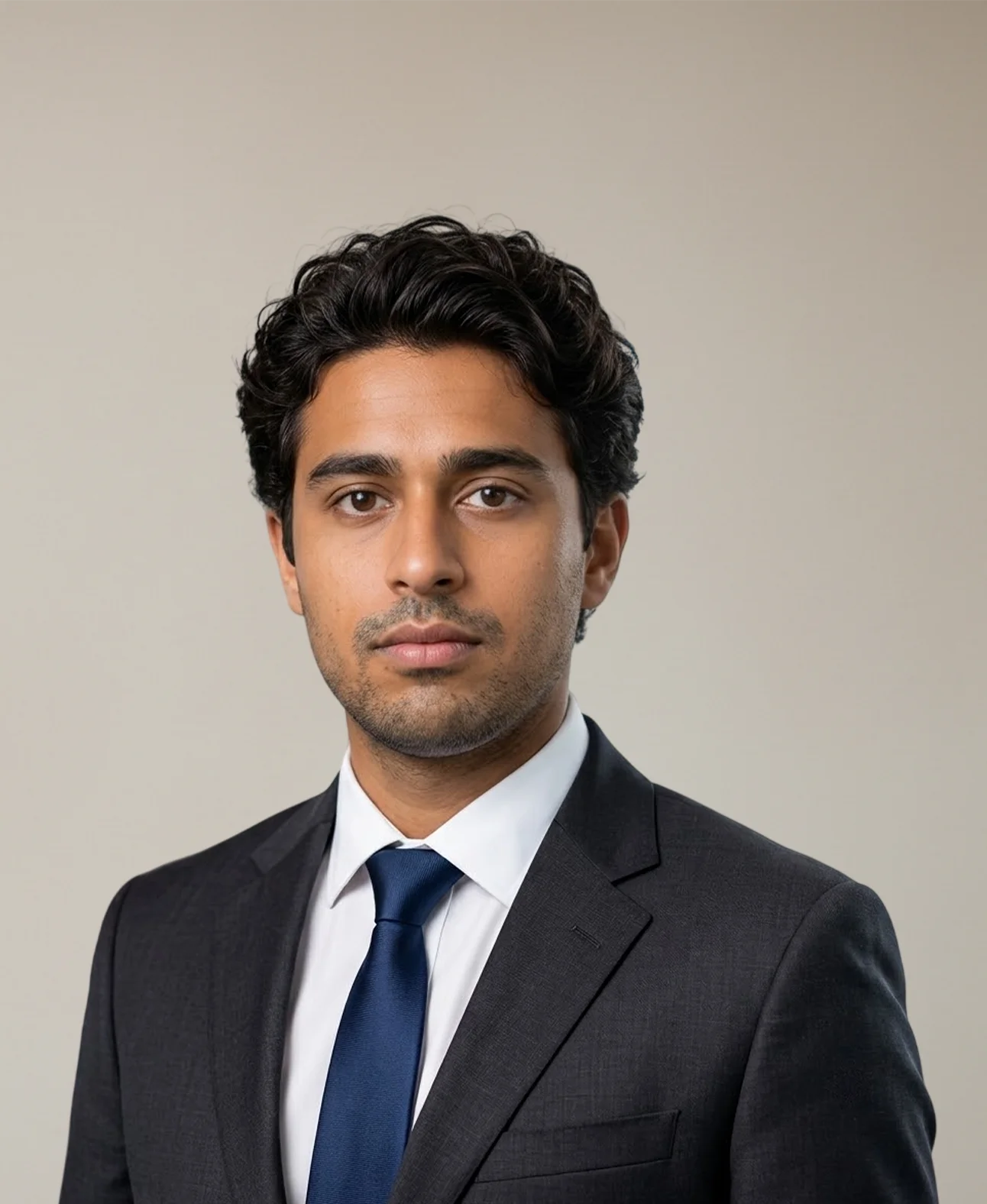
David Appadourai is a faculty member specializing in the epistemology of artificial intelligence, data science, and machine learning engineering. He is developing an epistemological approach to generative AI systems, at the intersection of the philosophy of science and artificial intelligence.
His work focuses in particular on the mathematical reasoning of models, specifically automatic theorem proving (neural theorem proving), as well as on the epistemological differences between proofs produced by humans and those produced by machines.
In addition to his teaching and research activities, he designs and deploys artificial intelligence systems in production, including LLM pipelines, RAG systems, agents based on the Model Context Protocol (MCP), and full-stack applications.
He is a member of the Association for Symbolic Logic (ASL), regularly participates in seminars at the AI Observatory at Paris 1 Panthéon-Sorbonne University, and is a member of the “Virtual Reality and Emotions” (RéVE) reading group at the Sorbonne Institute for Legal Research (IRJS - UR 4150).
| Year | Degree / Institution |
|---|---|
| In Progress | Ph.D. in Philosophy of Science – Università degli Studi di Roma “Tor Vergata.” Advisor: Professor Gabriele Pulcini. Thesis: An epistemological approach to mathematical reasoning in AI, focusing on automatic theorem proving and the epistemological differences between human proofs and machine-generated proofs. |
| Master’s 2 in Logic and Philosophy of Science (LOPHISC) – Université Paris 1 Panthéon-Sorbonne. M2 Thesis: “Evaluation of Computational Creativity for Symbolic Music Generation Models,” supervised by Professor Marco Panza, Research Director at the CNRS (16/20). M1 Thesis: “A Study of Set Theory Based on Attempts to Resolve the Continuum Hypothesis,” supervised by Jean Fichot, associate professor at IHPST (17/20). | |
| Bachelor’s degree in Mathematics and Computer Science Applied to the Humanities and Social Sciences (MIASHS), specializing in economics—University of Paris (now Université Paris Cité). | |
| Bachelor’s degree in Philosophy, with a concentration in Logic and Philosophy—University of Paris 1 Panthéon-Sorbonne. |
| Year | Position |
|---|---|
| 2025–present | aivancity School for Technology, Business & Society (permanent position since September 2026) - Epistemology of artificial intelligence: the limitations of current models; AI ethics and the robustness of learning systems; model interpretability and AI safety; equity and Fair ML; Linux environment (MSc in Data Engineering & Cloud Computing); Coding for AI & Data Science; Model Context Protocol (MCP) workshop—agent architectures and integrations. Courses taught in French and English (Grande École Program and MSc). |
| 2026–present | Teaching Assistant—University of Paris 1 Panthéon-Sorbonne. AI College: programming, algorithms, and logic. |
| 2024–2025 | Teaching Assistant—University of Tours. Data Science: Statistics and Data Mining, Master 2 in Digital Humanities. |
| 2024 | Instructor—École Pratique des Hautes Études (EPHE-PSL). Bachelor’s Degree in Sciences of a Sustainable World: Introduction to Music Programming (Sonic Pi). |
Responsibilities at aivancity
| Year | Position |
|---|---|
| 2021 – present | Technical Consultant - Parisian Spirit / TV STORE, Cachan. NDI video streaming network deployed across 80 Raspberry Pi nodes (photo booth kiosks, video walls, interactive AI installations) for a European specialist in audiovisual event production. |
| 2020–present | Founder and President, and Technical Director - Vidyalaya Association, Paris. Teaching French as a foreign language (DELF preparation) to migrants and providing academic support in working-class neighborhoods. Design of the entire digital infrastructure: Vidyia (conversational AI tutor—RAG based on the national curriculum, vision-based exam grading, speech synthesis), Next.js student portal, and DELF worksheet and exam generator. |
| 2023–present | Co-founder - Maison ANTIK. Premium rum brand: website Next.js/Vercel, automated SEO pipeline, and autonomous operational agent based on an LLM, managing customer relations, billing, and business process automations. |
| 2021–present | Founder and Developer - Aleph Music Publishing (SAS), Villejuif. Music publishing: automation of catalog editorial tasks and an app enabling independent artists to act as their own publishers. |
| 2015–2024 | Translation Assistant and Technical Developer - T.I.A.S.C.I, Paris. Translation of official documents for a certified translation agency; design of a machine translation assistant combining computer vision and an LLM API pipeline. |