Image




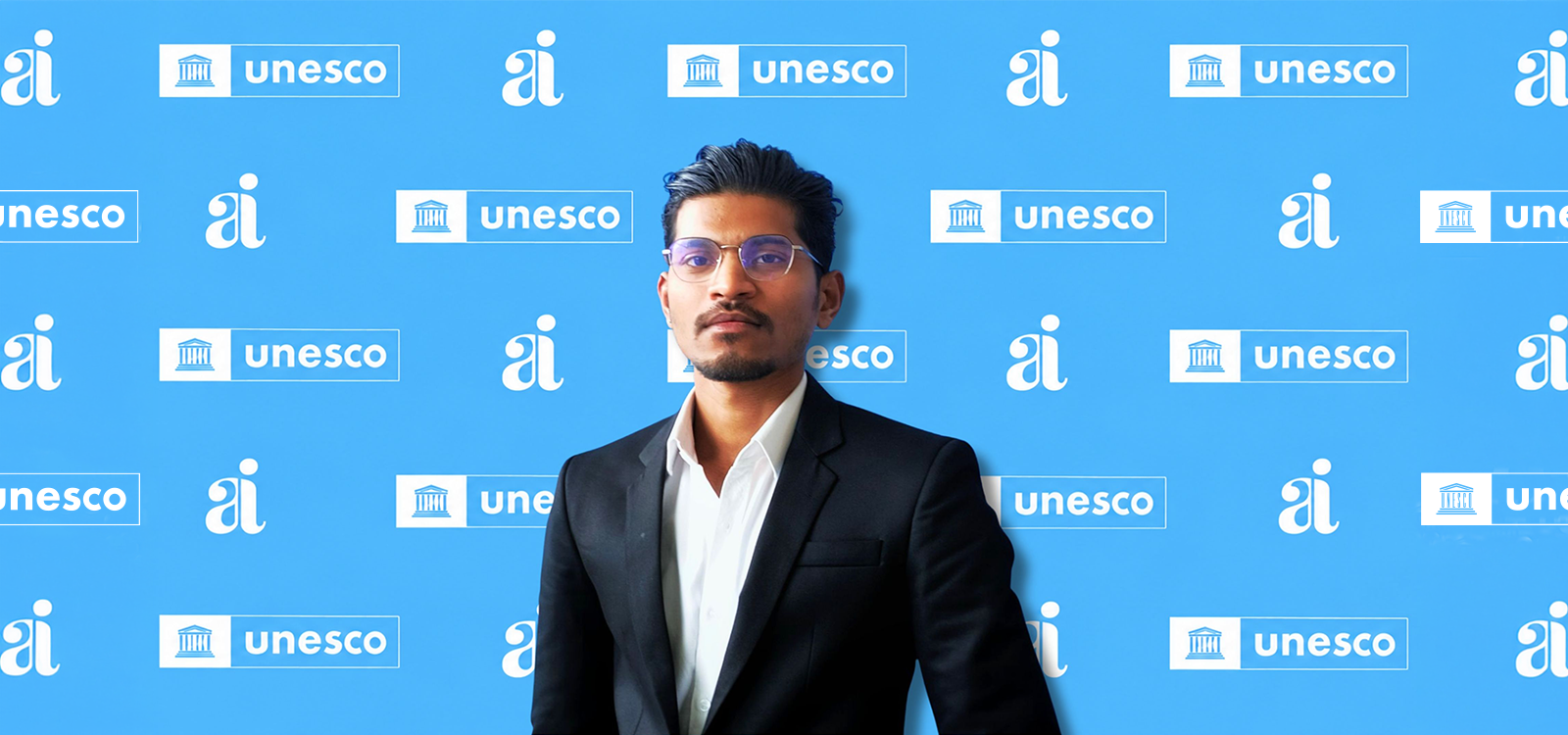
The journey of Vishal Nelaturi, an MSc Data Engineering & Cloud Computing student at aivancity, perfectly illustrates this new generation of hybrid profiles: talented individuals capable of harnessing artificial intelligence, advanced engineering and intelligent systems to address concrete human challenges.
From taking part in international discussions with UNESCO on the future of higher education to developing an ambitious technological project in the medical field, Vishal embodies a profoundly multidisciplinary, humanistic and forward-looking vision of innovation.
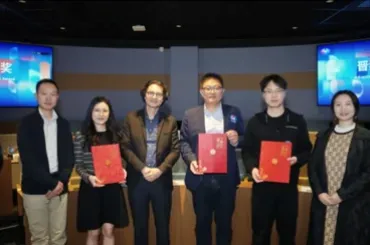
As part of the international event organised byUNESCO IESALC entitled:
“Launch of the Higher Education Global Trends Report: A Deep Dive into Higher Education Data, Systems and Policies”
Vishal Nelaturi took part in strategic discussions bringing together researchers, academic institutions, international experts and decision-makers to address the major transformations taking place in higher education worldwide.
This international meeting aimed to analyse the profound transformations taking place in education systems in the face of current technological, societal and economic developments.
Among the topics discussed were:
 Through this experience, Vishal was able to deepen his understanding of the role of smart technologies in shaping the systems of tomorrow. This approach is directly in line with aivancity’s philosophy: to train talented individuals capable of understanding technology whilst taking into account the human, societal and ethical dimensions of innovation.
Alongside this international experience, Vishal is currently developing an ambitious technological project: M.E.D.I.S. (Modular Emergency Drug Intelligent Synthesizer), a modular pharmaceutical formulation platform currently at an advanced stage of research and for which a French patent application has already been filed.
The project lies at the intersection of:
The ambition behind M.E.D.I.S. is particularly strong: One of the key observations that led to the project concerns the vulnerability of medical supply chains in the event of:
It was this issue that gave rise to the vision behind M.E.D.I.S.
The project therefore seeks to explore how future modular, intelligent and portable systems could contribute to more adaptable and resilient medical architectures.
From a technical perspective, M.E.D.I.S. combines several advanced disciplines:
The project is based on a modular architecture structured around several subsystems:
Among the components already developed are:
The project also incorporates considerations regarding:
Unlike many technology projects that prioritise speed to market, Vishal adopts a deliberately gradual, structured and responsible approach.
The project is currently at TRL 3 (Technology Readiness Level 3), which means that it remains, for the time being, a research and technical validation programme, with no clinical claims or immediate medical deployment.
This approach is based on several principles:
A philosophy that is particularly rare amongst young entrepreneurs in the technology sector.
Beyond terrestrial applications, M.E.D.I.S. also opens up new avenues of research into:
In particular, the project explores issues relating to:
A forward-looking vision that harnesses technological research to enhance human resilience.
The project’s potential has also been recognised as part of the national ‘Butterfly 2050 — France 2030’ competition, where the initiative was shortlisted for several qualifying rounds.
This selection highlights the relevance of the vision championed by Vishal, as well as the project’s long-term development potential.
Work on M.E.D.I.S. continues today with a clear ambition: to develop medical technologies that are more accessible, adaptable and resilient for the most complex environments.
Vishal Nelaturi’s career path fully reflects aivancity’s mission: to train hybrid professionals capable of understanding, designing and managing advanced technologies in a way that is useful, responsible and people-centred.
On the MSc in Data Engineering & Cloud Computing programme, students develop advanced skills in:
But beyond the technical aspects, aivancity also promotes a deeply humanistic approach to innovation.
A vision embodied today by students capable of transforming technology into practical solutions that address the major challenges of our time.
Through M.E.D.I.S., Vishal Nelaturi is not merely developing a technological architecture.
He is exploring the future of access to healthcare, the resilience of medical systems, and the role that artificial intelligence, smart systems and advanced engineering can play in the societies of tomorrow.
An approach that perfectly illustrates the vision championed by aivancity:
Technology that is useful, mindful, responsible and deeply people-centred.